The U.S. Government Just Ran Anthropic's Best Ad
Government ban is the most expensive endorsement money can't buy
June 4, 2026
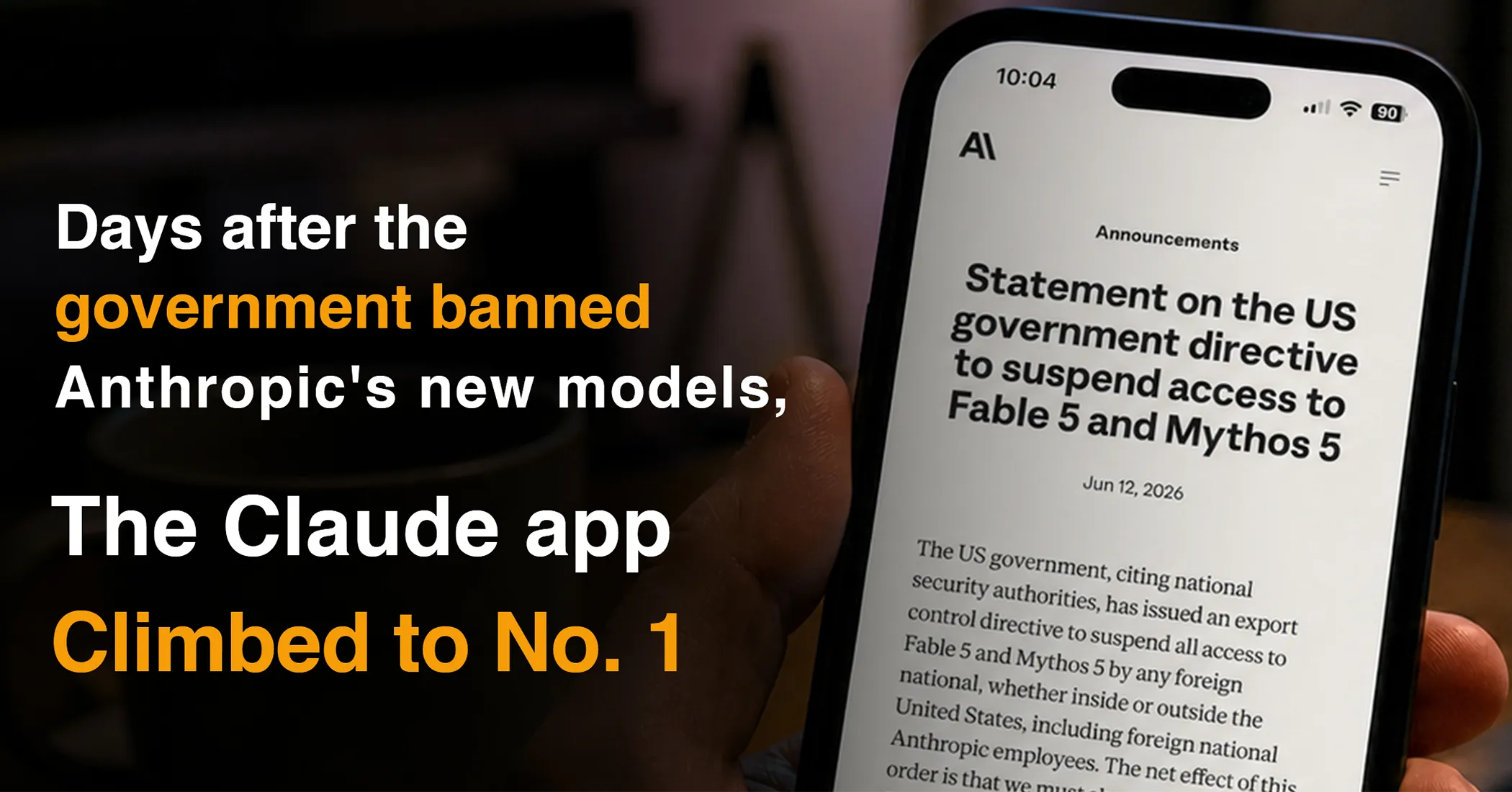
On the evening of June 12, 2026, Anthropic received an export-control directive from the U.S. government ordering it to cut off access to its two most powerful models, Fable 5 and Mythos 5, for any foreign national, whether inside or outside the United States, and including the company’s own foreign-national employees. There is no way to filter live API and web access by nationality in real time. So Anthropic did the only thing it could to comply: it pulled both models worldwide. For everyone. Including the U.S. enterprise customers paying for them.
The story wrote its own headline within hours. The government decided this AI was too dangerous to leave running. That framing is everywhere, and it is the wrong one.
What the directive was actually about
According to Anthropic’s own statement, the government’s concern traced back to a single narrow jailbreak: prompt the model to read a codebase and identify software flaws. That’s it. Not a universal bypass that unlocks a wide range of dangerous capability, but a specific, non-universal technique that surfaced a handful of previously known, minor vulnerabilities.
Anthropic’s response was blunt, and it’s the part most people skipped. The same capability already ships inside other frontier models, including OpenAI’s GPT-5.5. Security defenders use exactly this kind of code-reading every day to keep systems safe. By the standard implied in the directive, you wouldn’t be recalling one model. You’d be recalling half the models on the market.
Anthropic said the order rests on a misunderstanding, that it pulled the models to comply while it disputes the basis, and that applying this standard across the industry “would essentially halt all new model deployments for all frontier model providers.” That is a serious claim about precedent, and it deserves a serious hearing. A government recalling a shipped commercial product, used by hundreds of millions of people, on a verbal and unproven concern, should worry anyone who cares about due process. I’m not waving that away.
But step back from the security debate for a second and ask a colder question: what did the ban actually do to Anthropic as a business?
The forbidden-fruit effect is not a metaphor
It told the entire market, in one move, that Anthropic had built something the U.S. government considered too powerful to leave running.
You cannot buy that line. You cannot run that ad. No amount of paid media manufactures the credibility of a state regulator effectively saying, this thing is so capable we had to intervene. In a field where every lab insists its model is the most advanced, a government just did Anthropic’s bragging for it, with a straight face and a legal letterhead.
We have seen this script before, and it’s worth being specific about it because the parallel is almost exact.
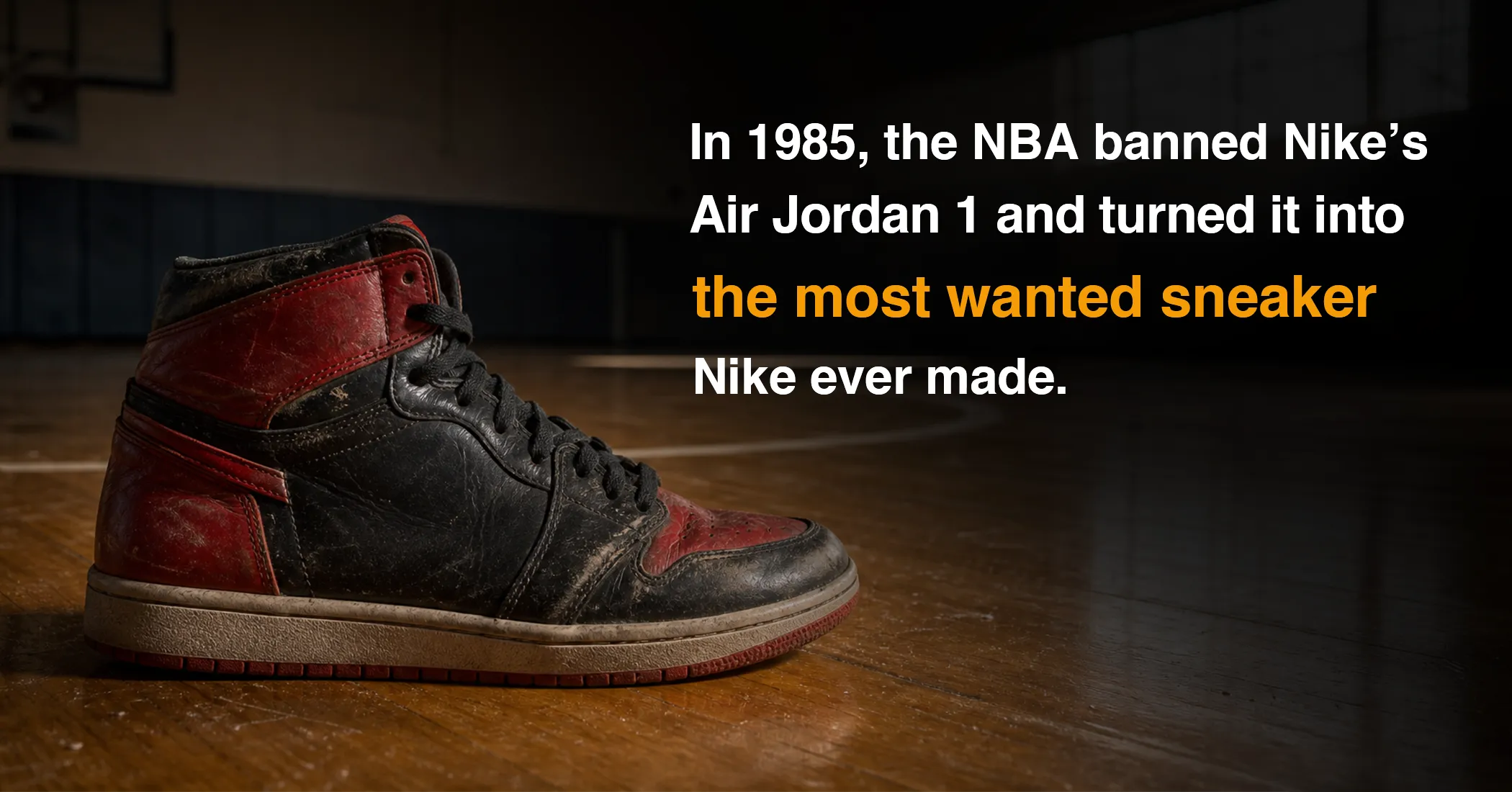
In 1985, the NBA banned Nike’s Air Jordan 1, the black-and-red colorway, for violating the league’s uniform rules. Nike didn’t quietly redesign the shoe. It paid the per-game fines so Michael Jordan could keep wearing them, and then it built the ban directly into the marketing. Banned became the campaign. The forbidden version was the one everyone wanted. Sales didn’t suffer; they detonated. Forty years later, “Banned” is still one of the most valuable stories in sneaker history.
Scarcity and prohibition are among the oldest demand engines we know. Tell people they can’t have a thing, especially a thing that’s been declared dangerous, and a meaningful share of them want it more, not less. The Streisand effect, the bootlegger’s premium, the banned book that triples its print run. This is well-trodden behavioral ground.
The early signal here moved in exactly that direction. In the days after Anthropic took its public stance, supporters rallied behind the company’s position and pushed the Claude app to the #1 spot in the app store. That’s not a valuation, and it’s not proof of long-term gain. But it is a real, observable demand response, and it points the same way the Air Jordan story does.
One number to be careful with
It’s tempting to reach for Anthropic’s eye-watering valuation as the proof point. Resist that, because the timeline doesn’t support it.
Anthropic closed a $65 billion Series H at a $965 billion post-money valuation, surpassing OpenAI as the most valuable AI startup in the world. But that round was announced on May 28, roughly two weeks before the ban. Anchoring the “ban made them more valuable” argument on the $965 billion figure would be a clean narrative and a false one. The valuation was already there. The ban didn’t create it.
What the ban did was something subtler and arguably more durable than a funding round: it shaped perception. It positioned Anthropic, in the public imagination, as the lab building the model a government felt it had to stop. For a company already racing at the front, that’s not a wound. It’s a halo.
The reframe
So here’s where I land, and I’ll say it plainly enough to be wrong on the record.
If the goal of this directive was to contain Anthropic, it backfired. The security rationale looks thin by Anthropic’s own technical account, the capability in question is already widely available, and the most visible near-term effect was to hand one of the most capable AI companies on earth a story no marketing budget could manufacture.
The ban didn’t shrink the brand. It crowned it.
The part that should stay with us isn’t the marketing win. It’s the precedent. A model can now be pulled from the global market on a verbal concern, with no public technical record, and that should make everyone uneasy regardless of which company it lands on next.
But if you’re asking who came out ahead this week, the answer isn’t complicated. The government wanted to send a message about danger. The message the market actually heard was: Anthropic built something worth banning.
And everyone wants the banned shoe.
Most Recent Posts...
How Apple Acquires Customers Who Can’t Buy Anything Yet
Apple Didn’t Just Announce a Safety Feature. It Made a...
Read MoreHow Four Rivals Spent Millions to Look Identical in the World Cup 2026
Four Brands, One Color, and the World Cup’s Quietest Marketing...
Read MoreHow Finland Made AI Literacy a Civic Project
How Finland Turned AI Education Into Civic Infrastructure They Skipped...
Read More